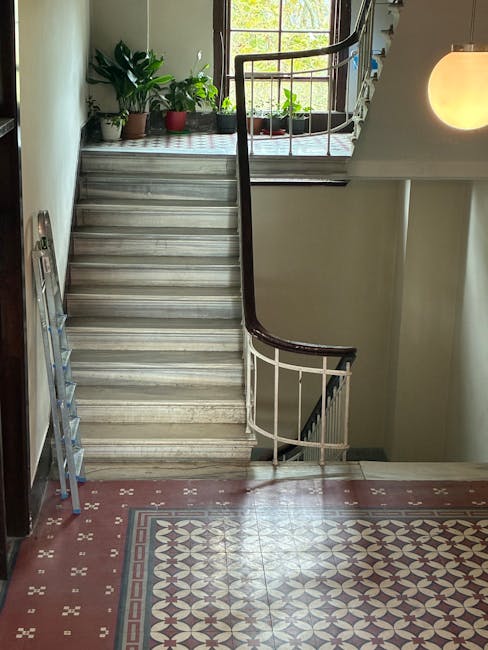
Difficult access cleaning jobs in Fulham stairs and narrow flats
Anyone who has carried a vacuum up four flights of a tight staircase in Fulham knows the feeling: the stairwell looks harmless from the street, then reality hits. Landings are narrow, banisters are awkward, and the flat itself may have low ceilings, awkward corners, or no decent place to park equipment. Difficult access cleaning jobs in Fulham stairs and narrow flats need a different approach from standard domestic cleaning, because the challenge is not just dirt. It is access, time, safety, and doing a proper job without damaging walls, floors, or your back.
This guide explains what makes these jobs tricky, how professionals plan them, what equipment and methods usually work best, and where people often go wrong. If you live in a period conversion, manage a rental, or simply need a one-off deep clean in a cramped property, this should help you make better decisions. Truth be told, a good clean in a narrow flat often starts long before a cloth touches a surface.
For readers comparing services, it can also help to understand how specialist cleaners organise visits, handle access, and price unusual layouts. You may also want to look at related services such as deep cleaning, domestic cleaning, or end of tenancy cleaning if the flat needs more than a surface tidy.
Contents
- Why this kind of cleaning matters
- How it works in practice
- Key benefits and practical advantages
- Who it is for and when it makes sense
- Step-by-step guidance
- Expert tips for better results
- Common mistakes to avoid
- Tools, resources and recommendations
- Law, compliance, standards, or best practice
- Options, methods, or comparison table
- Case study or real-world example
- Practical checklist
- Conclusion
- Frequently asked questions
Why Difficult access cleaning jobs in Fulham stairs and narrow flats Matters
Fulham has a lot of homes where access changes the whole cleaning job. You see it in converted terraces, split-level flats, basement apartments, and upper-floor homes where the staircase seems to have been designed by someone who never carried a hoover in their life. Narrow access matters because it affects how quickly a cleaner can work, what equipment can be used, and how safely items move through the property.
There is also a quality issue. If a cleaner cannot move freely, corners get missed, edges collect dust, and larger items like rugs, mattresses, or upholstery may not be cleaned properly. In small or awkward homes, one bad decision can mean scuffed paintwork, broken trim, or a wet floor where no one can pass without stepping carefully. Not ideal.
For landlords and tenants, access becomes even more important around check-outs, inventory standards, and turnaround time. For homeowners, especially in busier parts of Fulham, the concern is usually convenience and protecting finishes in tight hallways. And for cleaners, it is a matter of planning rather than brute force. A narrow stairwell punishes haste.
That is why specialist services such as one-off cleaning and move out cleaning are often a better fit than a standard quick tidy. The property may look compact, but the job is often more demanding than a larger, easier-to-access home.
How Difficult access cleaning jobs in Fulham stairs and narrow flats Works
The basic method is simple enough: assess, plan, protect, clean, and inspect. The real skill is in the details. Before a cleaner arrives, they should understand the building layout, the number of stairs, whether there is a lift, where parking or loading is possible, and which rooms or items need special care. Without that, the visit can become a slow shuffle of equipment up and down stairs. Nobody wants that.
A good cleaning team usually starts by identifying the path through the building. Where can equipment be placed safely? Is there room to turn with a vacuum, steam machine, or bucket? Are there fragile walls, old banisters, or thin hallway paint that marks easily? These questions sound basic, but they shape everything that follows.
In a tight flat, cleaners often break work into smaller stages. They may carry in only the necessary tools first, then clean top-down so dust does not fall on finished areas. They may use compact machines instead of bulkier equipment. For more specialist fabrics or surfaces, they might combine methods such as steam carpet cleaning, upholstery cleaning, or oven cleaning depending on the state of the property.
In our experience, the biggest difference comes from preparation. A cleaner who arrives with a plan tends to move calmly, protect surfaces properly, and finish more consistently. One who arrives without a plan often spends half the visit trying not to bump into things. Small flat, big difference.
What usually changes in a difficult-access job
- Equipment size: compact tools are often better than heavy, oversized machines.
- Cleaning sequence: rooms may need to be cleaned in a different order to avoid blocked walkways.
- Protection: stair rails, corners, and skirting boards may need extra covering.
- Time: jobs often take longer because movement is slower and more careful.
- Transport: repeated trips from van to flat can add real effort and cost.
Key Benefits and Practical Advantages
It may sound obvious, but choosing the right cleaning approach for awkward access can save time, money, and a lot of frustration. The benefits are not just about getting a cleaner flat; they are about avoiding damage and reducing stress. To be fair, that matters just as much as a shiny carpet.
- Better finish: a tailored approach reaches edges, stairs, skirting, and hard-to-reach spots.
- Less risk of damage: careful handling protects walls, paintwork, doors, and flooring.
- More efficient cleaning: the right tools reduce double-handling and wasted movement.
- Less disruption: a planned route through the property keeps daily life manageable.
- Improved hygiene: tight spaces can trap dust, pet hair, and odours, so a proper clean makes a noticeable difference.
- Better for landlords and tenants: properties are easier to present well at check-in or check-out.
There is also a practical advantage people sometimes overlook: confidence. When access is tricky, a capable cleaner can tell you what is realistic, what needs more time, and what might need specialist treatment. That honest steer is useful. Very useful, actually.
Expert summary: in small Fulham flats, good cleaning is less about force and more about control. The right sequence, compact tools, and careful movement matter more than speed.
Who This Is For and When It Makes Sense
This kind of cleaning is relevant to a surprisingly wide group of people. If your home has narrow stairs, awkward corners, or limited storage space, you already know that regular cleaning can become a weekly puzzle. The same applies if you manage a rental property where access is difficult for contractors, or if you are preparing a flat for new tenants and want the job done quickly but properly.
It also makes sense for:
- Owners of period conversions with small hallways and steep internal stairs.
- Tenants who need a move-out clean before inspection.
- Landlords and letting agents who need reliable turnaround and consistent standards.
- Busy households where regular maintenance cleaning is hard to keep up with.
- People with bulky items such as rugs, mattresses, sofas, or curtains that are hard to move.
If your property also needs support with related interior work, it may be worth combining the visit with services like carpet cleaning, rug cleaning, or curtain cleaning. Combining jobs can be especially sensible when access is already awkward. Fewer visits, fewer stairs, fewer headaches.
Step-by-Step Guidance
If you are arranging a difficult-access clean, the following steps will make the process much smoother. They are simple, but they are the sort of simple that saves the day.
- Map the access route. Note stair width, turns, lifts, entry codes, parking issues, and any tight internal doors.
- Identify fragile areas. Mark walls, polished wood, old paint, and any surfaces that scratch or mark easily.
- List the priority tasks. Decide whether the job is a full deep clean, a one-off refresh, or a specific service such as carpet, upholstery, or oven cleaning.
- Choose compact equipment. Smaller vacuums, portable tools, and lighter products are usually easier to manage in narrow flats.
- Protect surfaces first. Put down cloths or covers where equipment may bump against corners, skirting, or stair rails.
- Work top to bottom. Start with dusting and higher surfaces before moving to floors and lower touchpoints.
- Clear the path as you go. Keep walkways open. It sounds basic, but clutter in a narrow flat can turn a good clean into a messy one.
- Inspect at the end. Check for missed edges, damp patches, lifted items, or marks on walls and railings.
A small but important point: if the flat is especially tight, it can help to clean room by room rather than trying to treat the whole place as one open job. That keeps the workflow calmer and makes it easier to avoid backtracking through freshly cleaned areas.
Expert Tips for Better Results
In tight Fulham properties, a few practical habits make a bigger difference than fancy kit. Here are the ones that come up again and again in real work.
- Use fewer products, not more. Too many bottles create clutter and slow the job down.
- Carry only what you need. Repeated trips are annoying, yes, but dragging everything upstairs at once is worse.
- Choose low-residue cleaning where possible. It reduces streaking and sticky finishes in small rooms.
- Watch humidity and drying time. In compact rooms, airflow may be poor, so drying can take longer than expected.
- Protect stair edges. A rolled towel or protective pad can save a banister from scuffs.
- Move slowly around corners. That one turn on the landing is often where damage happens.
- Ask about special fabrics or finishes. A period flat may have old wood, delicate paint, or mixed materials that need gentler treatment.
There is a small discipline to it. Not glamorous, but effective. And if you are cleaning after tenants or guests, that discipline keeps complaints down and standards up. Win-win, as people say.
Common Mistakes to Avoid
Most problems in difficult-access cleaning jobs are avoidable. The trouble is that they often seem minor right up until they are not. Here are the big ones.
- Underestimating the layout: assuming "small flat" means "easy job" is a classic mistake.
- Bringing oversized equipment: some machines are brilliant in open spaces and terrible in narrow stairs.
- Skipping protection: one scrape on a stair rail can cost more than the cleaning visit itself.
- Rushing the route: speed and narrow access are not best friends.
- Ignoring drying time: this matters especially with carpets, upholstery, and soft furnishings.
- Leaving clutter in place: clutter steals time and increases the chance of missed spots.
- Not confirming priorities: if the client expects mattress cleaning but only asked for a general clean, disappointment is almost guaranteed.
One slightly awkward but common scenario: a cleaner arrives to find a hallway packed with shoes, bags, recycling, and a folding bike. Suddenly the "quick job" is not quick at all. A five-minute tidy before the visit can change the whole day.
Tools, Resources and Recommendations
The best tools for difficult-access cleaning are usually the ones that are easy to carry, easy to turn, and easy to control. Compactness counts. So does not overcomplicating things.
| Tool or method | Why it helps in narrow flats | Best used for |
|---|---|---|
| Compact vacuum | Lighter to carry up stairs and easier to move in tight hallways | Routine dust and debris removal |
| Microfibre cloths | Take up little space and reduce the need for bulky kit | Surfaces, frames, skirting, shelves |
| Portable steam or extraction unit | Useful where deep cleaning is needed but access is limited | Carpets, rugs, upholstery |
| Protective pads or covers | Helps prevent marks on rails and walls | Stairwells, landings, corners |
| Multi-surface neutral cleaner | Reduces the need to carry several products around the property | General domestic cleaning |
For jobs involving more than basic tidying, services such as house cleaning, regular cleaning, and after builders cleaning can be useful depending on the state of the property. If the flat has awkward surfaces outside as well, window cleaning or hard floor cleaning may also be relevant.
One practical recommendation: if access is difficult, choose services that explain how they handle transport, protecting finishes, and working in tight spaces. Transparency is more helpful than shiny claims. Always has been.
Law, Compliance, Standards, or Best Practice
For cleaning work in homes and rental properties, the main issue is usually not legal complexity but sensible care. Cleaners should work in a way that protects occupants, staff, and property. That means using products correctly, managing slips and trip hazards, and avoiding unsafe lifting or carrying. If equipment is heavy, the route matters. If chemicals are used, ventilation matters. If floors are wet, clear warnings and drying time matter.
In the UK, good practice generally includes following health and safety procedures, keeping insurance in place, and using cleaning products according to manufacturer guidance. For landlords, tenants, and managing agents, property condition, access arrangements, and post-clean standards should all be clear before the job starts. That reduces disputes later. A lot later, sometimes.
If you want a better sense of how a company approaches safe work, it is sensible to review pages such as health and safety policy, insurance and safety, and terms and conditions. These do not replace common sense, of course, but they do show whether the business takes safe working seriously.
Also worth checking: whether the company is clear about complaints handling, privacy, and payment processes. In a real service business, those boring pages matter because they tell you how the operation is run. If needed, you can review complaints procedure, privacy policy, and payment and security.
Options, Methods, or Comparison Table
Not every difficult-access job needs the same approach. Sometimes a simple domestic clean is enough. Other times, you need a deeper, more specialist visit. Here is a straightforward comparison.
| Option | Best for | Strengths | Limitations |
|---|---|---|---|
| Routine domestic clean | Ongoing upkeep in a lived-in flat | Simple, regular, lower disruption | May not tackle built-up grime or detailed areas |
| One-off deep clean | Seasonal resets, move prep, neglected spaces | More thorough, better for awkward corners | Takes longer and may cost more |
| End of tenancy clean | Move-outs and inventory expectations | Detailed, suitable for handover standards | Usually more intensive than general cleaning |
| Specialist service mix | Carpets, upholstery, ovens, or mixed surfaces | Targets problem areas properly | Requires more planning and access coordination |
For many Fulham flats, a mix of services is the smartest route. For example, a narrow staircase flat might need deep cleaning in communal touchpoints, carpet treatment on the upper floor, and oven cleaning in the kitchen. It sounds like a lot, but in a compact home it can be efficient if scheduled well.
Case Study or Real-World Example
Picture a typical Fulham split-level flat: front door at street level, then a steep internal staircase to the living area, bedroom, and kitchen tucked into a narrow rear extension. The hallway is tight, the railings are a little worn, and the carpet on the stairs has collected dust in the edges. Not filthy, just lived-in. The sort of place where a quick wipe makes little dent.
In that situation, a sensible cleaner would usually begin by protecting the landing and stair edges, then remove loose dust and debris from the stairs before moving into the main rooms. If the carpet is marked, a steam carpet cleaning treatment may be better than surface vacuuming alone. If the sofa sits in a tight corner and shows signs of daily use, sofa cleaning could be added. If the oven has grease build-up, that can be tackled too, rather than leaving the kitchen half-finished.
The real result is not dramatic. It is calm. The flat feels lighter, the stairs look less tired, and the whole place becomes easier to maintain. That is usually what clients notice first. Not "wow, this looks like a hotel," but "ah, now I can actually keep on top of it."
Practical Checklist
Use this checklist before booking or starting a difficult-access clean. It will save time, and probably a bit of stress too.
- Confirm the exact flat layout, including floors, stairs, and landings.
- Check whether there is a lift, loading bay, or parking restriction.
- Identify fragile surfaces, narrow turns, and low ceilings.
- List the cleaning priorities in order of importance.
- Decide whether you need general cleaning, deep cleaning, or specialist services.
- Ask what equipment will be brought and whether it is compact enough for the property.
- Clear access routes, hallway clutter, and loose items before the visit.
- Protect valuables, personal papers, and delicate items.
- Confirm how long the job is expected to take.
- Check drying time if carpets, upholstery, or steam cleaning are involved.
- Make sure you know how issues or complaints would be handled.
- Inspect the property at the end while everything is still fresh in your mind.
Quick takeaway: the less the team has to improvise in a tight staircase or narrow hallway, the better the end result. Good access planning really does show in the final finish.
Conclusion
Difficult access cleaning jobs in Fulham stairs and narrow flats are not difficult because the cleaning itself is mysterious. They are difficult because space changes the rules. Narrow stairs, awkward turns, and compact rooms demand careful planning, the right tools, and a steady hand. When those things come together, the results are better, safer, and far less stressful.
If your flat has tight access, do not judge the job by floor size alone. Think about movement, protection, and how the clean will actually be carried out. That is where the difference lies. And once it is done properly, you notice it straight away. The place just breathes a bit easier.
Get a free quote today and see how much you can save.
Frequently Asked Questions
What makes difficult access cleaning jobs in Fulham stairs and narrow flats different from standard cleaning?
The main difference is movement. In a standard home, cleaners can carry equipment easily and work through rooms with less restriction. In narrow flats or stair-heavy buildings, every step, turn, and landing affects how the job is done. That changes timing, equipment choice, and the level of care needed.
Do narrow stairs make cleaning more expensive?
Sometimes, yes, because more time and more care are needed. Access can also affect how much equipment can be brought in at once. That said, the final price depends on the size of the job, the condition of the property, and whether specialist services are involved. It is best to ask for a clear quote based on the actual layout.
Can a cleaner bring full-size equipment into a small Fulham flat?
Sometimes they can, but full-size equipment is not always the best choice. In tight stairwells or awkward rooms, compact tools are often safer and more efficient. A good cleaner will choose equipment that fits the space rather than forcing a standard setup into a difficult layout.
What should I clear before a difficult-access clean?
Clear shoes, bags, folded prams, laundry, loose cords, and anything else that blocks the route. In small flats, clutter creates bottlenecks fast. If the cleaner has to move too many items before starting, you lose time and increase the risk of accidents.
Is steam cleaning suitable for narrow flats?
Yes, often it is, provided the equipment can be carried safely and the space has enough airflow for drying. Steam cleaning can be very effective for carpets and some soft furnishings, but it is not always the right choice for every fabric or surface. A cleaner should judge that carefully.
How long does a difficult-access cleaning job usually take?
There is no single answer, because access changes the whole pace of the job. A compact flat with poor access can take longer than a larger property with easy movement. The best guide is a survey of the layout and a clear list of tasks before the visit begins.
What if my flat has old walls or delicate paintwork?
That is very common in Fulham, especially in older conversions. Let the cleaner know in advance so they can protect corners, use gentler techniques, and avoid heavy tools near vulnerable surfaces. Small precautions prevent a lot of regret later.
Can difficult-access cleaning include carpets, sofas, and ovens too?
Yes. In fact, combining services is often sensible in compact homes because it reduces the number of separate visits. Depending on what needs attention, you might combine carpet cleaning, sofa cleaning, oven cleaning, or upholstery cleaning in one visit.
How do I know if a cleaning company is suitable for tight-access properties?
Look for clear communication about access, safety, insurance, and what equipment they use. If they ask sensible questions about stairs, parking, and layout, that is usually a good sign. If they seem vague, that is worth paying attention to.
Is it worth booking a deep clean instead of a standard domestic clean?
If the property has built-up dust, difficult corners, or a lot of hidden grime, then yes, a deep clean is often better value. Standard domestic cleaning is fine for maintenance, but it may not tackle the harder-to-reach areas that tend to build up in narrow flats.
What are the biggest safety risks in stair-heavy cleaning jobs?
The biggest risks are trips, slips, scuffs, and strain from carrying heavy items in awkward spaces. Wet floors, clutter, and poor lifting technique make things worse. This is why careful planning and the right equipment matter so much.
Can landlords use this kind of service between tenancies?
Absolutely. In fact, it is often one of the best times to use it, because empty flats are easier to clean thoroughly and inspect properly. If the layout is awkward, a specialist clean can help the property look presentable for the next tenant without unnecessary delay.
What should I ask for when getting a quote?
Ask what is included, how access affects the job, what equipment will be used, and whether any extra time may be needed for stairs, parking, or specialist treatment. A proper quote should feel clear, not mysterious. If it sounds too neat to be true, it probably is.
A tricky flat does not have to become a tricky experience. With the right planning, the job becomes manageable, and the result is a home that feels easier to live in. That, honestly, is what most people want in the end.